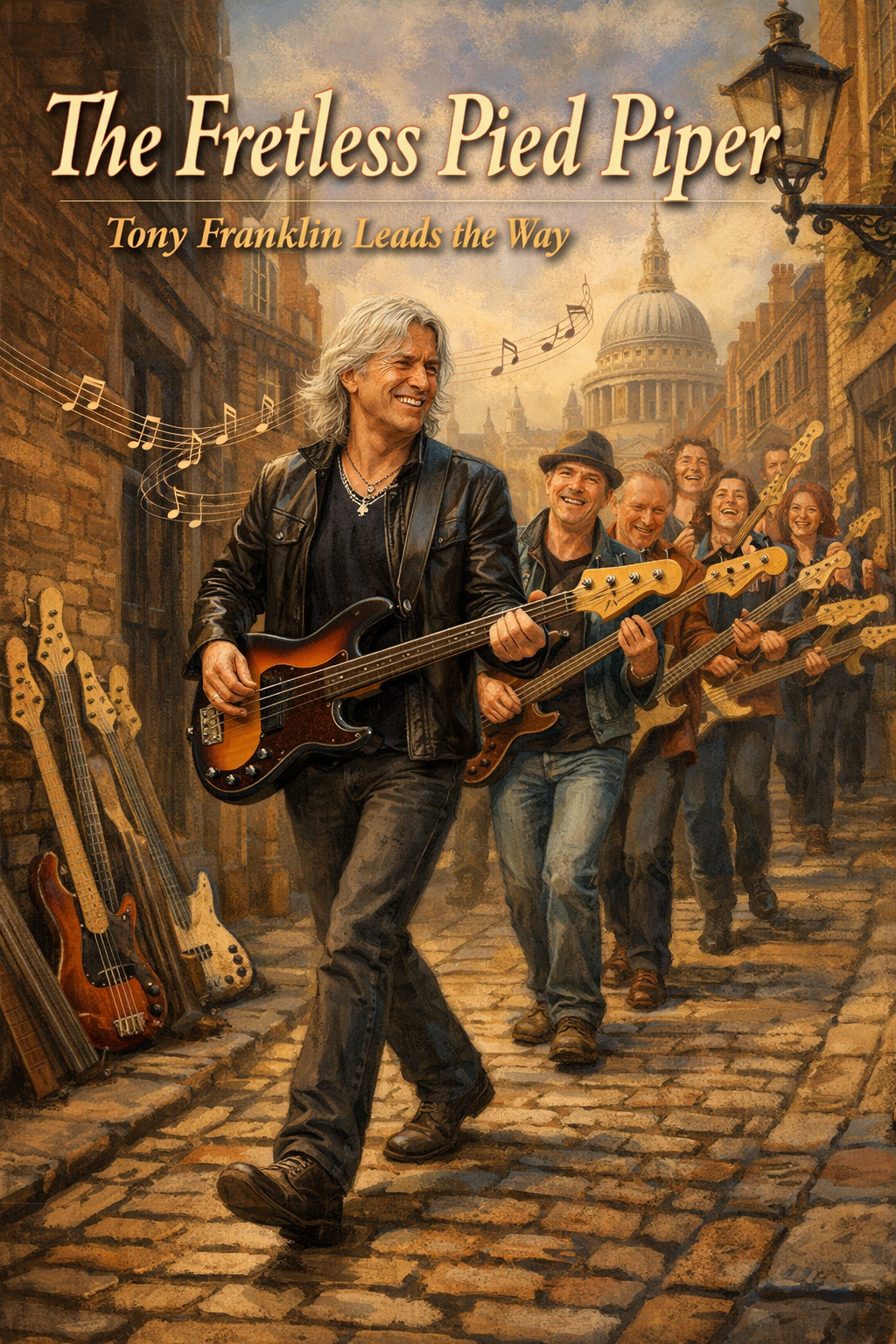
Tony Franklin
Fretless Pied Piper

Tony Franklin

The Fretless Monster moniker reflects Tony Franklin's deep, expressive approach to the bass guitar, a journey that began long before he became a globally recognized session musician. Born in Derby during the spring of 1962, he first stepped onto a stage at the tender age of five, setting the foundation for a lifelong devotion to music.


Collaboration Role Focus
Kenny Wayne Shepherd Band Member Delivering powerful blues-rock rhythms since 2011
Roy Harper Session Bassist Providing intricate low-end work since early career days
Blue Murder Bassist/Keyboards Contributing to hard rock sessions with John Sykes

🔧 Musical Foundations

Musical family upbringing provided the environment where Franklin first honed his craft, leading him to master both fretted and fretless instruments. His versatile skill set extends well beyond the bass, as he is also proficient on keyboards, synthesizers, and vocals, which allows him to contribute dynamically to diverse recording projects.

  • Technical command describes his early development in the English bass scene, where he practiced a melodic sensibility that combined tight rhythm with expressive phrasing.
  • Session bass work has defined much of his middle career, with appearances on hundreds of albums spanning genres from hard rock to progressive folk.
  • Instructional material includes his solo albums and a dedicated bass DVD, which helped cement his status as a teacher and influencer for new generations of players.

🎼 Legacy and Influence

Official signature models from Fender recognize his unique contribution to the instrument's evolution, specifically focusing on the fretless Precision Bass. This long-standing relationship with gear manufacturers underscores his role not just as a player, but as a technical innovator in rock music history.

  • Diverse artist collaborations showcase his reach, including credits with icons like David Gilmour, Kate Bush, and Whitesnake.
  • Television performance history includes appearances on major network shows, further broadcasting his distinctive sound to a general audience.
  • Innovative fretless work remains the core of his identity, drawing inspiration from legends while establishing a signature, vocal-like tone that is instantly recognizable to rock listeners.

Franklin continues to be an active force in the recording studio and on the stage, maintaining a reputation for reliability and creative depth across the industry.


tell me a story about famous british bass player, Tony Franklin, but avoid landing on the well known story about his appearance in the supergroup, The Firm. Make it engaging, and something that will be fun to share with Tony.

ChatGPT said:

Here's one that avoids the obvious The Firm chapter and instead highlights a moment that bass players tend to appreciate.


One of my favorite Tony Franklin stories isn't about arena rock at all—it's about what happened when he quietly helped change the sound of an entire generation of bass players.

Long before fretless bass became fashionable in rock, the instrument had a reputation for being either a jazz tool or something that sounded vaguely like "Jaco." Tony had different ideas. He wasn't trying to imitate anyone. He approached the fretless like a lead guitarist who happened to play bass.

His singing vibrato, precise intonation, and lyrical phrasing became so distinctive that manufacturers started paying attention. When he worked with Fender on what eventually became the Tony Franklin Fretless Precision, he insisted on an unusual combination: a fretless Precision with a split-coil P pickup and a bridge humbucker. At the time, it wasn't the obvious design choice. Purists thought of fretless basses as either Jazz Basses or boutique instruments.

Tony's response was essentially: "This is the sound I actually use."

The funny part is that, once players got their hands on it, they realized he'd solved a problem they hadn't been able to articulate. It had the familiar authority of a Precision but enough bite and definition to let a fretless sit in a rock mix without disappearing. It wasn't a museum piece—it was built to survive loud guitar players.

What's interesting is that the instrument has become something of a gateway drug. Plenty of bassists who swore they'd never own a fretless have admitted that his signature model was the one that changed their minds. That's a rare achievement. Most signature instruments celebrate an artist's legacy. Tony's actually recruited people into an entirely different style of playing.

If you tell him this story, you might ask whether he realized he was designing an ambassador for fretless bass—or whether he was simply trying to recreate the sound he'd been chasing all along. My guess is he'll have a good story about the prototypes, because those design decisions weren't accidental.

After all, there are lots of signature basses. There aren't many that quietly changed people's opinion of an entire instrument.

Gallery