
KEY TAKEAWAYS
- Both index funds and ETFs are typically low‑cost, diversified, passive investments.
- ETFs trade intraday like stocks, while index mutual funds price once daily.
- ETFs may offer greater tax efficiency and trading flexibility.
- Index mutual funds are often simpler for long‑term, automatic investors.
- The better choice depends on how you invest and your desired level of flexibility.
Similarities Between Index Funds and ETFs
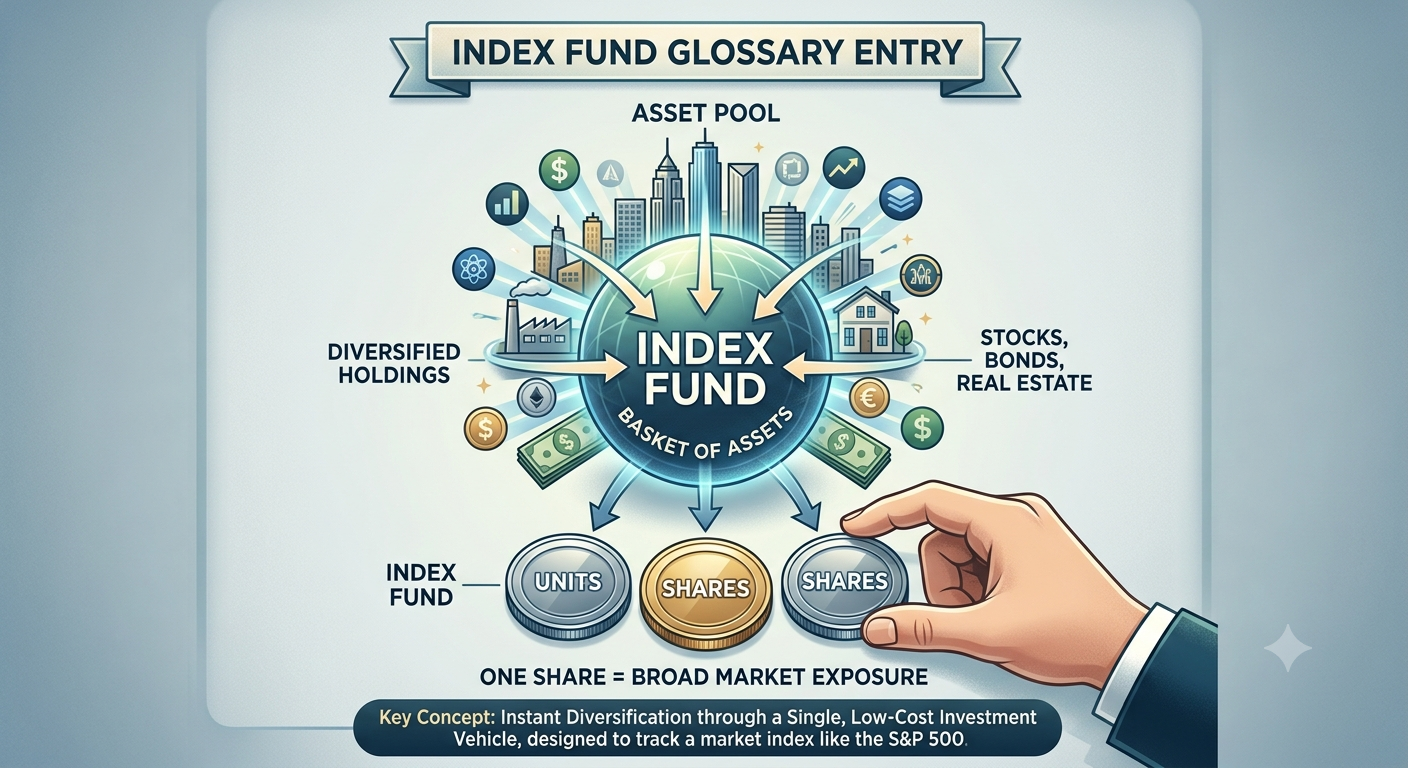
Both index funds and many ETFs are designed to track a benchmark index rather than beat it.
As explained in What Are Index Funds, and How Do They Work?, "Index funds mirror the performance of benchmarks like the S&P 500 and other market indexes by mimicking their makeup."
Similarly, many ETFs are passive and track an index. According to Exchange-Traded Fund (ETF): What It Is and How to Invest, passive ETFs:
"aim to replicate the performance of a broader index—either a diversified index such as the S&P 500 or a more targeted sector or trend."
Shared characteristics:
- Broad diversification
- Passive management
- Generally lower fees than active funds
- Transparency in holdings
- Designed for long‑term investing
Both structures allow investors to gain exposure to hundreds of stocks or bonds in a single purchase.
Key Differences
1. Trading and Pricing
This is the biggest structural difference.
From Investing in Mutual Funds: What They Are and How They Work:
"Among the most important is that ETF shares are traded on stock exchanges like regular stocks, while mutual fund shares are traded only once daily after markets close."
Also:
"ETF prices, like stocks, fluctuate throughout the day according to supply and demand."
Implication:
- ETFs can be bought and sold at any time during market hours.
- Index mutual funds are priced once daily at the net asset value (NAV).
2. Cost Structure
Both tend to be inexpensive, but ETFs often edge out mutual funds.
From Exchange-Traded Fund (ETF): What It Is and How to Invest:
"ETFs tend to have lower fees than mutual funds."
And from What Are Index Funds, and How Do They Work?:
"Index funds have lower expenses and fees than actively managed funds."
Implication:
- Both are low-cost compared to active funds.
- ETFs may have slightly lower expense ratios in many cases.
- ETFs may involve brokerage spreads (though many are commission-free).
3. Tax Efficiency
From Exchange-Traded Fund (ETF): What It Is and How to Invest:
"An ETF is more tax-efficient than a mutual fund because most buying and selling occurs through an exchange."
Implication:
- ETFs typically generate fewer taxable capital gains distributions.
- Index mutual funds are still relatively tax-efficient compared to active funds, but generally less so than ETFs.
4. Investment Minimums
From What Are Index Funds, and How Do They Work?:
"Investors buy shares directly from the mutual fund company at the net asset value (NAV) price, calculated at the end of each trading day."
Index mutual funds often require minimum investments (e.g., $1,000–$3,000), while ETFs can be purchased by the share (and many brokers allow fractional shares).
Side‑by‑Side Comparison
| Feature | Index Mutual Fund | ETF |
|---|---|---|
| Trades like a stock? | ❌ No | ✅ Yes |
| Pricing | Once per day (NAV) | Real-time intraday pricing |
| Expense ratios | Low | Often slightly lower |
| Tax efficiency | Good | Often better |
| Automatic investing | Easy | May depend on broker |
| Minimum investment | Often required | Price of one share |
Investor Suitability
Index Mutual Funds May Be Best For:
- Long-term, buy‑and‑hold investors
- Retirement accounts (401(k), IRA)
- Investors who want automatic contributions and dividend reinvestment
- Those who don't need intraday trading
ETFs May Be Best For:
- Investors who want trading flexibility
- People using limit orders, stop-losses, or short-selling strategies
- Taxable brokerage account users seeking efficiency
- Investors starting with smaller amounts
The Bottom Line
Index funds and ETFs are more alike than different—they both provide diversified, low-cost access to markets. The main difference is logistical: ETFs trade like stocks; index mutual funds trade once daily.
Your choice depends less on performance (which is usually very similar if tracking the same index) and more on how you invest.
From here, it may help to look deeper into whether ETFs are more tax-efficient in real-world investing, how automatic investing works with index mutual funds, or whether intraday trading flexibility actually improves investor returns.
Investopedia doesn't make recommendations for you to buy, sell, or hold securities or investments. We offer independent and unbiased product and service evaluations, and we provide relevant analysis, context, insights, and educational information to help you make smarter, better-informed decisions. We may receive commissions on purchases made from links on Investopedia.